

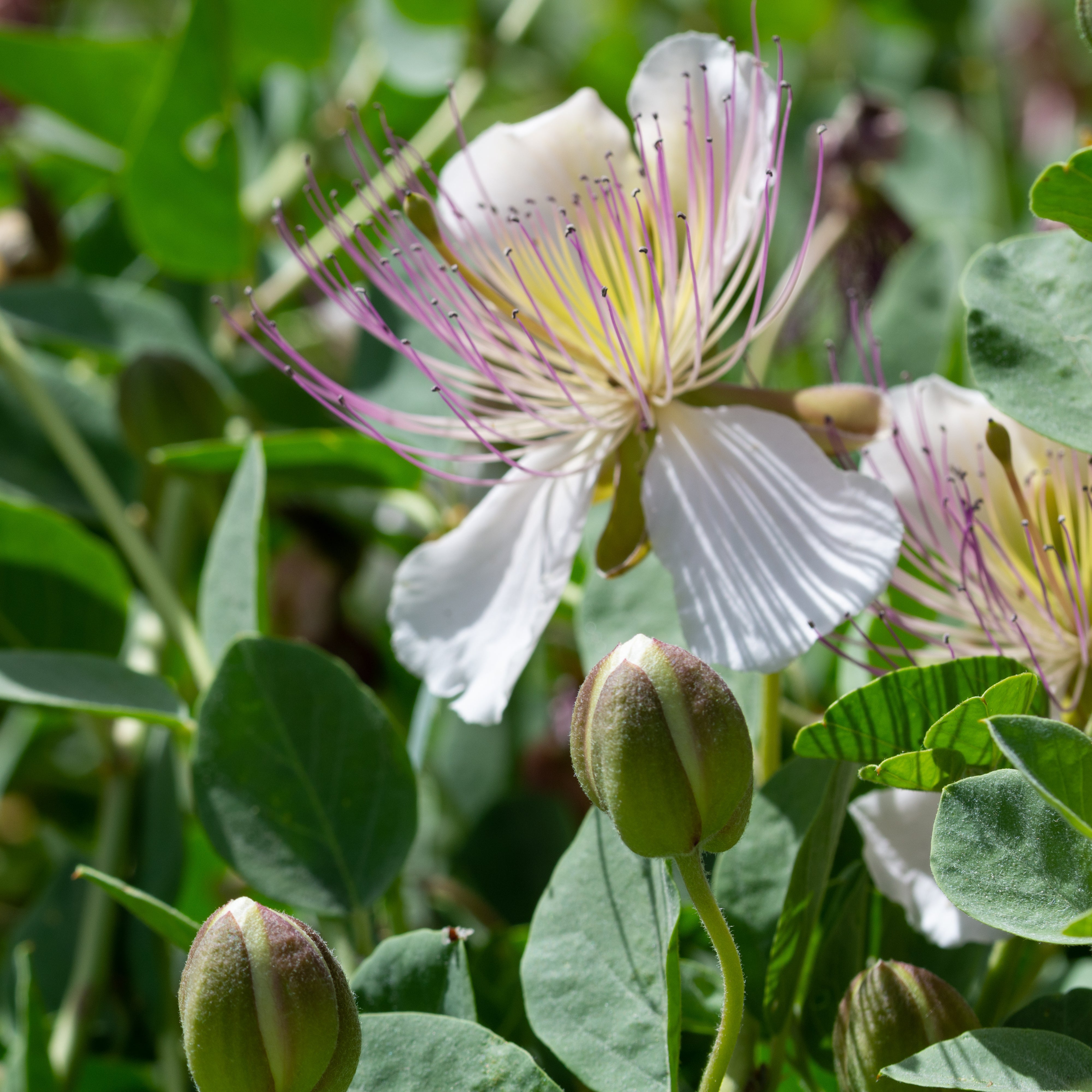


Caper Bush Seeds (Capparis spinosa) Perennial
Grow the Mediterranean's most sought-after delicacy! This hardy, sun-loving perennial yields prized savory buds for gourmet curing. Once established, these drought-tolerant bushes provide decades of elegant blooms and flavorful harvests. Hardiness zones 9-11.
- 40 seeds minimum
- Start indoors for best results. Seeds require cold stratification for successful germination. Sow stratified seeds 1/4" deep in a mix of 50% potting soil, 25% perlite, and 25% sand. Store in warm spot (70–85°F) with moist soil. Germination may take 3 weeks to 3 months.
- See Annie’s Caper Bush Growing Guide for detailed instructions.
- Mature plants reach 2 to 3 feet in high, spreading 3 to 10 feet wide.
Caper Bush Growing Guide
1. Germination: Overcoming the Challenge
Caper seeds are tough to germinate due to their hard, dormant coats.
- Initial Soak: Submerge seeds in warm water (110–115°F) for 12–24 hours.
- Cold Stratification: Wrap soaked seeds in a damp paper towel, seal in a bag, and refrigerate (40°F) for 65–70 days.
- Second Soak: After refrigeration, soak seeds again in warm water for 24 hours.
- Scarification (Optional): Lightly sand the seed coat to aid water absorption.
- Sowing: Plant seeds 1/4–1/2 inch deep in a mix of 50% potting soil, 25% perlite, and 25% sand.
- Care: Keep soil moist and warm (70–85°F). Germination may take 3 weeks to 3 months.
2. Early Care & Transplanting
- Thinning: Snip weaker seedlings with scissors to avoid disturbing sensitive roots.
- Hardening Off: When seedlings reach 3–5 inches, move them to 1-gallon pots. Gradually acclimate them to outdoor conditions over 2–3 weeks using the plastic bag method.
- Final Site: Choose a sunny location (6–8+ hours of sunlight) with excellent drainage, such as rocky walls or raised beds.
3. Soil, Fertilizer & Maintenance
- Soil Chemistry: Use alkaline soil (pH 7.5–8.5). Amend acidic soil with garden lime or crushed oyster shells.
- Fertilization: Apply a low-nitrogen, high-potassium/phosphorus fertilizer (e.g., 5-10-10 or 16-16-16) 2–3 times during spring and summer.
- Pruning: Flowers grow on one-year-old wood. After the plant is 3 years old, prune heavily in late winter to encourage new growth.
4. Companion Plants
Capers thrive with other Mediterranean plants that love heat and dry, rocky soil:
- Herbs: Rosemary, thyme, sage.
- Flowers: Lavender, rock rose (Cistus), California poppy.
- Succulents: Aloe vera, sedum (stonecrop).
5. Troubleshooting
- Root Rot: Caused by overwatering or clay soil. Let the top 2 inches of soil dry completely before watering.
- Pests: Cabbage White Butterfly caterpillars may attack leaves; use organic Bt spray or hand-pick them.
- Chlorosis (Yellow Leaves): Indicates acidic soil or iron deficiency. Use chelated iron and check soil pH.
6. Harvesting & Curing
- Capers: Harvest unopened flower buds early in the morning when they’re tight and dark green. Smaller buds are more flavorful.
- Caperberries: Allow flowers to bloom and die to produce caperberries, which can also be pickled.
- Curing: Capers must be cured before eating. Soak rinsed buds in coarse sea salt for 1–2 weeks or brine them in equal parts water and white wine vinegar for at least 3 days.
Plastic Bag Hardening-Off Technique
The plastic bag method is a hardening-off technique that eases seedlings from indoor conditions to outdoor environments. Acting as a temporary greenhouse, it stabilizes humidity and protects plants from wind and temperature changes.
Summary of the Method
This method focuses on managing transpiration, as indoor plants develop a thin waxy cuticle and lack the ability to quickly close their stomata.
- Preparation: Place the seedling in a clear plastic bag, ensuring it doesn’t touch the foliage.
- Support: Use stakes to prevent condensation from causing rot.
- Ventilation: Loosely tie the bag or add air holes for gas exchange.
- Exposure: Start with shaded outdoor placement for a few hours.
- Gradual Removal: Over 5–7 days, increase exposure and open the bag until it’s fully removed.
- Caution: Avoid direct sunlight, as the greenhouse effect can overheat and damage plants. Always start in full shade or on cloudy days.
Best That Benefit from This Method
- Nightshades: Tomatoes, peppers, eggplants (sensitive to humidity drops).
- Cucurbits: Cucumbers, melons, squash (large leaves lose moisture quickly).
- Tender Herbs: Basil, cilantro, parsley (prone to wind burn).
- Tropicals: Monsteras, hibiscus, calatheas (mimics jungle humidity).
- Legumes: Runner and pole beans (need structural protection).
Free shipping on orders over $100
Shipping & Returns
Shipping
We strive to ship every order on the next business day. That can be very difficult at the peak of the season, and it can take 4 to 6 business days for us to get your order out. Know that we are doing our best to get your order out as fast as we can! We ship orders Monday through Friday.
Order tracking
As soon as your order ships we will provide tracking details via email.
Get in touch
We're not happy unless you're happy. Please contact us if you have questions about our seeds or have any problems with your order.